APA Citation Style Guidelines
APA citation format is probably one of the most popular citation styles.
Everyone knows it, or at least has heard about it.
However, the problem is that most students are just lost when it comes to APA references.
It’s very simple:
- You write a paper.
- You have to cite all sources.
- You have no idea how to do it right.
Does it sound familiar?
If yes, then you have come to the right place.
Custom Writing team created the most comprehensive guide to APA referencing.
What’s so special about it?
First, there are examples to every single type of source you may need to cite (and that’s awesome).
Second, everything is explained in a simple language.
But if it’s still confusing even after reading the guide, you can try using the APA title page generator. It will make figuring things out a lot easier.
Ok, so what should you start with?
To write a paper that will correspond with all APA format requirements, you need to remember the following:
- the paper should be typed
- it should be double-spaced
- margins on all sides should be 1″, while paper size should be 8.5″ x 11″
- a clear, readable font (Times New Roman or Arial) should be used
- font size should be 12 pt.
Papers written in APA are divided into four sections:
- Title Page
- Abstract
- Body
- Reference List
Note: Outline or Table of Contents can also be required.
Each of the sections follows specific formatting rules.
Title Page
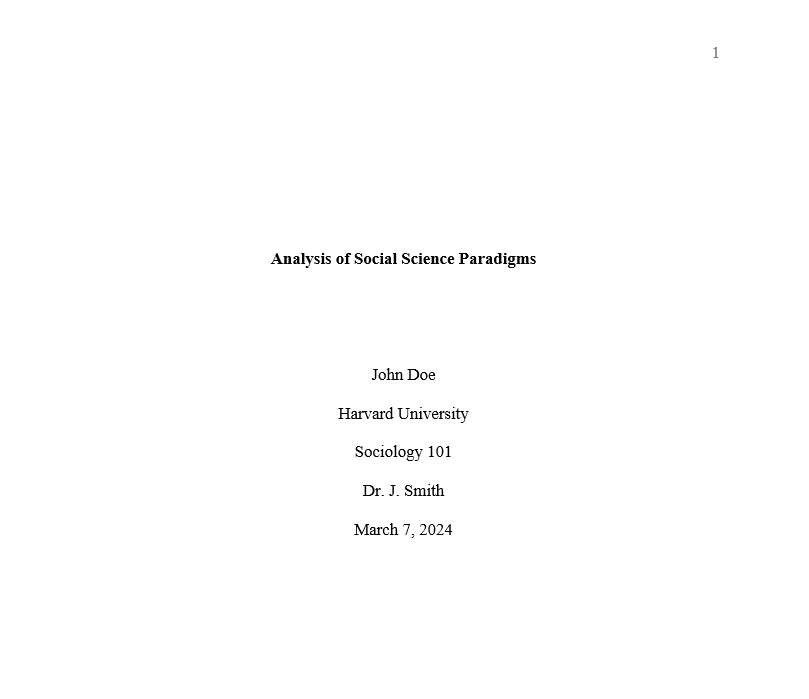
- Include the title of your paper, author’s (authors’) name(s), the name of your college or university, the course name, your instructor’s name, and a due date.
- Your title should take up 1-2 lines, be centered and inserted in the upper half of the title page.
- Use upper and lower case letters, boldface.
- Do not add degrees or titles for the author’s name: First Name Middle Initials. Last Name.
- You may use degrees or titles for the instructor’s name: e.g., Dr. First Name Last Name.
- The title page should be double-spaced.
Abstract
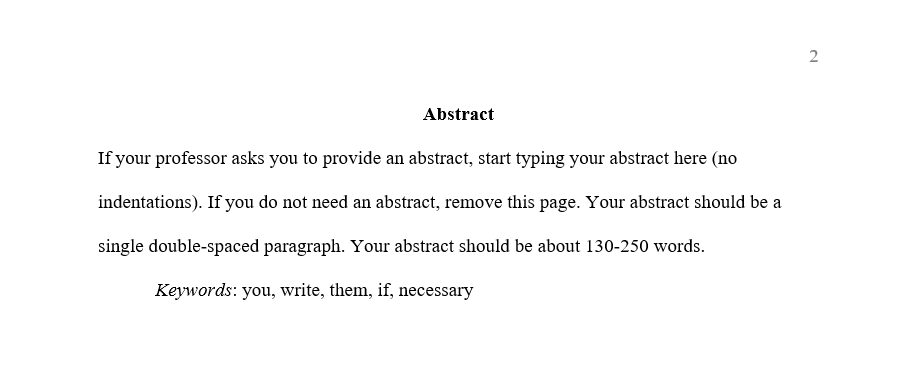
Abstract is written on a new page:
- The title ‘Abstract’ should be bold and centered on the top of a new page. Do not use quotation marks and italics.
- The text on the abstract page is NOT indented.
- Abstract should contain only the most relevant information, such as research topic/thesis statement, research question(s), sample size/participants, research design/method, data analysis, results, and conclusions.
- Abstract consists of a single paragraph (from 140 to 250 words); the text is double-spaced.
- If keywords are required, they are indented and written beneath the abstract. Do not forget to use italics: Keywords.
APA Headings
To make a paper well-organized, it is recommended to separate sections and add headings. Five levels of headings are used in APA:
Level 1 Bold, Centered, Uppercase and Lowercase Heading
Level 2 Bold, Flush Left, Uppercase and Lowercase Heading
Level 3 Bold, Italicized, Flush Left, Uppercase and Lowercase Heading
Level 4 Indented, Bold, Uppercase and Lowercase Heading with a Period. Begin your text after the period.
Level 5 Indented, Bold, Italicized, Uppercase and Lowercase Heading with a Period. Begin your text after the period.
Reference List
Reference list is inserted at the end of your paper; any source that you use needs to be cited on the reference page and in the text. Citing an author in your text, but providing no information about the source on the reference list would be considered a mistake.
These are basic rules that you need to follow when writing a reference list:
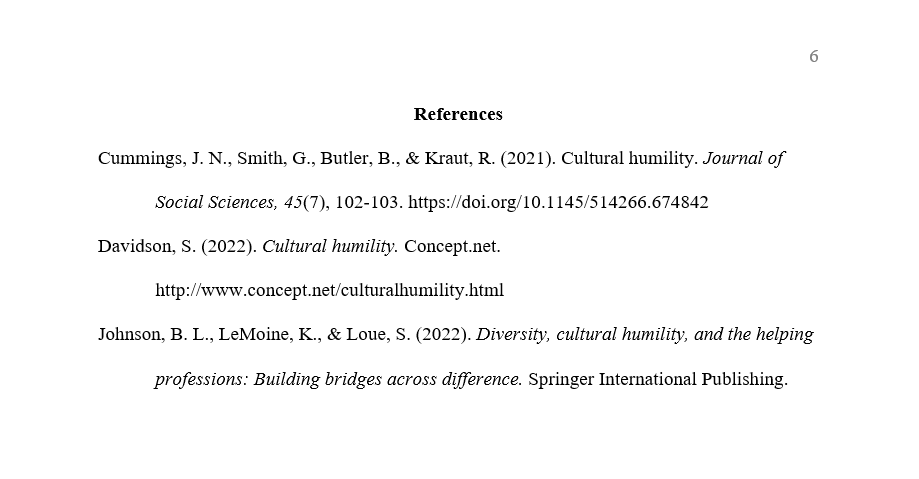
- Indent all lines after the first line in the entry; the lines should be indented one-half inch from the left margin of your paper.
- Do not forget to invert authors’ names: last name initials.
Cage, D. C. (One author)
Smith, J. D., & Davidson, H. S. (Two authors)
- If there are 3-20 authors in the source, list all of them.
Smith, J. D., Jones, J. F., Riley, H. S., & Lee, A. K.
- Reference list is always alphabetized by the last name (from A to Z).
- Book and journal titles need to be in italics.
- Journal titles are always presented in full.
Archives of General Psychiatry
- Do not alter the journal’s name
JAMA Psychiatry (NOT Jama Psychiatry)